Introduction
Welcome, future artist! Clicking on this article might be one of the best things to have happened to you. This article aims to guide novice sketch artists on how to begin their artistic journey, so let’s start with sketching tips for beginners.
A Complete Guide about Best Sketching Tips for Beginners
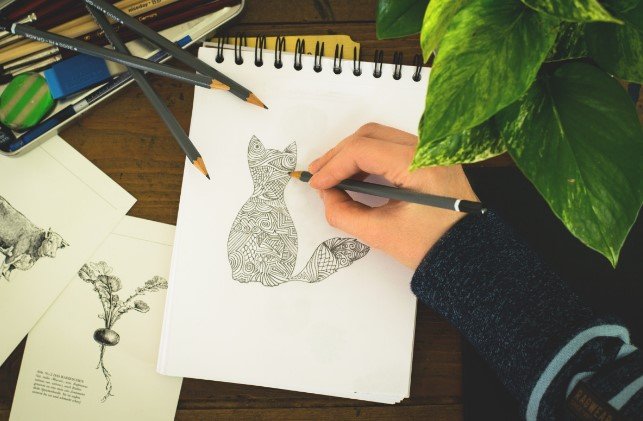
In a world filled with fake news and low-dopamine content, sketching offers lasting, old-school value. Instead of harmful habits that drain the mind, try sketching to boost serotonin, the brain’s feel-good hormone. With Sketching Tips for Beginners, you can build a healthier mind, a better lifestyle, and even a name for yourself.
Follow these three steps for sketching:
1. Observe First
Examine your specimen carefully for about 2-3 minutes and try making some contour drawings as a warm-up exercise. If it’s like a circular object, try making perfect circles; if it’s more linear, then try making perfectly straight lines. The same goes for all basic 2D shapes like squares, rectangles & triangles. This is a basic exercise for any artist.
2. Keep It Loose
The shading part and detailing come much later. First, you need to make light and lose lines to block in your subject. Once you have the blue print you can start adding in the details to add definition to the lines.
3. Practice Daily
Consistency beats intensity, so it doesn’t matter what you choose to draw. According to the Sketching Tips for Beginners, all you have to do is give ten minutes a day each to practice your sketch and let the time work its magic.
You can even redraw objects you have already sketched before. It’s ok to make mistakes or miscalculations, you’re just learning right now, so consider your first sketchpad as your playground and go freestyle!
Read More: Calligraphy Art: A Culture’s Signature
Sketch like a Pro: Must-Have Tools for Every Artist
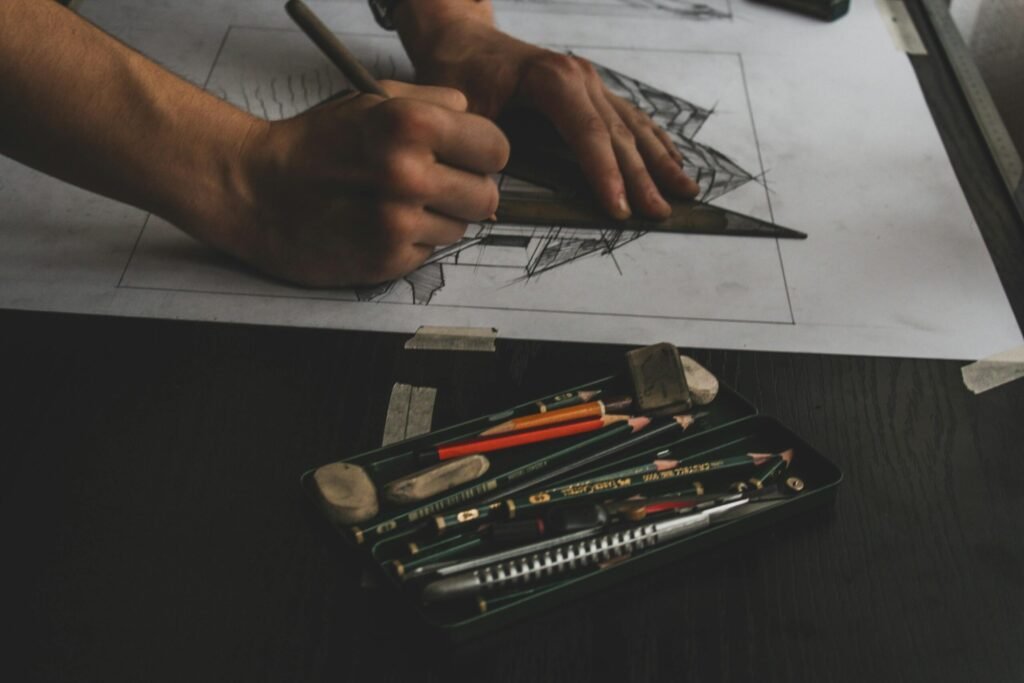
The beginner’s sketching guide recommends having the following tools ready:
HB or 2B Sketch Pencil
- HB is a middle-ground pencil, so it’s neither too hard nor too soft. It’s perfect for outlines and basic sketching.
- 2B is slightly softer and gives a darker line, which is great for adding depth or shadows.
As you progress, you can explore a full pencil set (4H to 6B), but HB and 2B are more than enough in the beginning.
Eraser (Rubber or Kneaded)
You’ll make mistakes, and that’s fine! That’s where erasers come in.
- A regular rubber eraser works well for erasing clear lines and cleaning up your drawing.
- A kneaded eraser is like soft clay; you can shape it to erase small areas or gently lift graphite without damaging the paper. It’s especially useful for shading and highlights.
Sharpener
A sharp pencil makes a big difference in line quality.
- A manual sharpener is affordable and portable.
- For better control, some artists prefer knife sharpening, but that’s more advanced.
- Make sure your pencil stays sharp, as dull tips can affect precision and confidence.
Sketchpad or Plain Paper
You don’t need an expensive artist sketchbook.
- A4 or A5 drawing pads are ideal, since they’re portable and have decent paper thickness.
- Avoid glossy or very thin notebook paper because it can tear easily when erased or shaded heavily.
- For beginners, even a regular notebook is fine to get started.
Why do you want to learn sketching?
- Brain Yoga: People often emphasize physical training, but mental workouts are just as vital. The mind supports the central nervous system and keeps the body functioning, enduring more stress than muscles or bones. That’s where sketching helps, as it relieves anxiety and depression. With Sketching Tips for Beginners, you can become your wellness guru!
- Your Sketch, your Mental Mirror: Sketching lets you express and understand yourself on a deeper level, which is a reflection of your mental well-being. You don’t need to be a pro; it’s not a competition. With the right Sketching Tips for Beginners, anyone can use sketching as a powerful tool for self-expression and healing.
- One Skill, Endless Rewards: Sketching is more than just a hobby; it’s a way to make a statement about your creativity and refinement. Even beginners can gain respect and recognition. With the right Sketching Tips for Beginners, you might turn your passion into a side hustle, or even begin a journey into the world of renowned artists.
- Your pencil, your journey: At Raaigani, we aim to inspire all forms of creativity, so we’re sharing some for beginners. Don’t worry about skill or comparison. Embrace constructive criticism, as it shapes your art into something deeper and more meaningful.
Conclusion
Sketching is more than just lines on paper; it’s a journey into focus, creativity, and mental clarity. By starting small, practicing daily, and using the right tools, beginners can unlock their artistic side step by step. Remember, every great artist once started with a single pencil stroke, yours could be next.
About the Author
Zain Ul Abidin Yousuf Malik is a creative writer at Raaigani, passionate about storytelling through culture and tradition. His work blends simplicity, emotion, and clarity to connect with readers across generations.