Intro
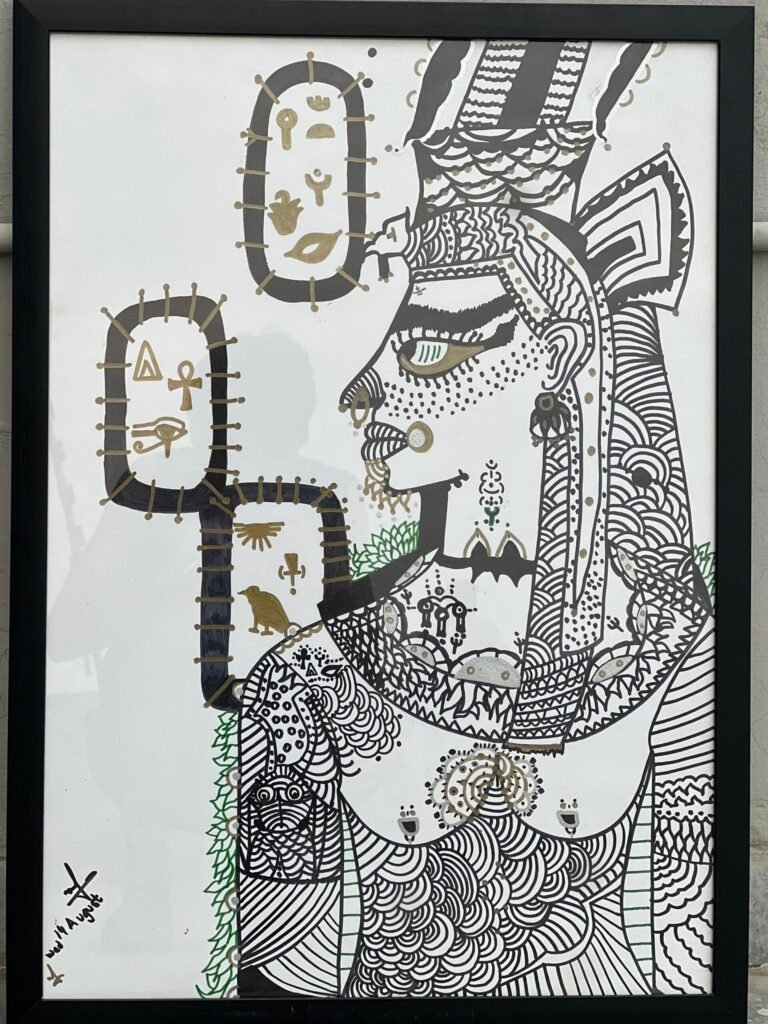
At Raaigani, we aspire to bridge the gap between what’s modern and ancient. Therefore, we are thrilled to offer a beautiful Egyptian Deity Painting, which a talented local artist meticulously handcrafted. By presenting our valued customers with this precious Egyptian Deity Painting, we aim to encourage and support our local artists.
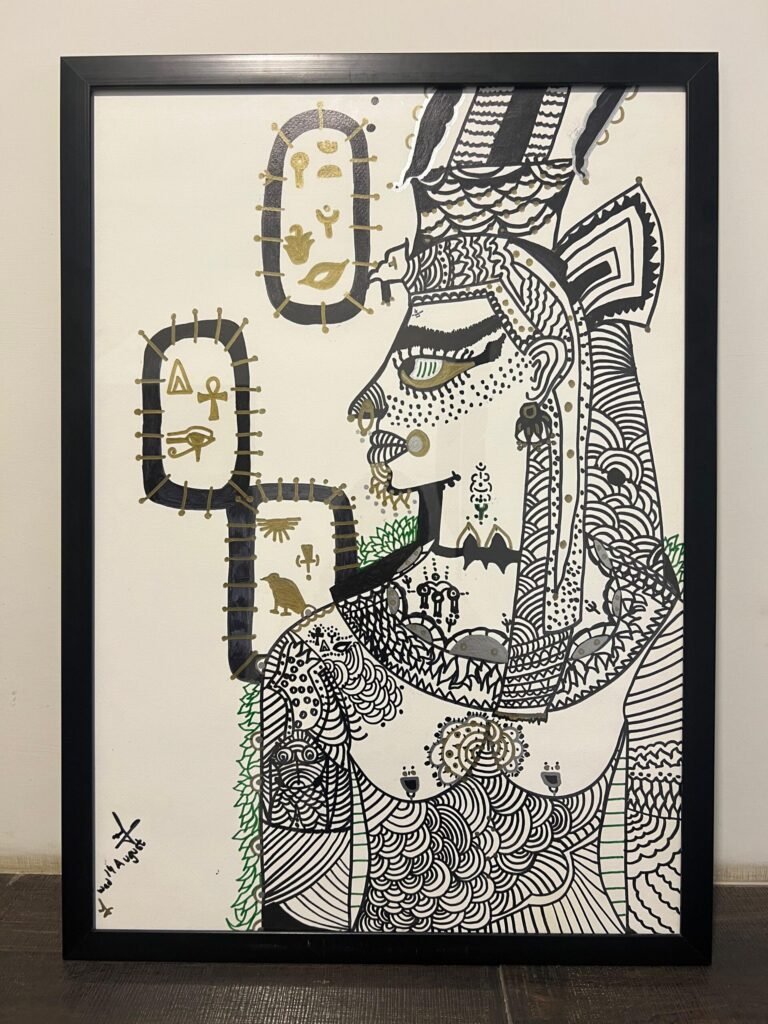
The purpose of this article is to enlighten our enthusiastic readers about this Egyptian Deity Painting, so stick around!
Historical Background regarding this Egyptian Deity Art
- Embracing Isis: Isis held immense importance, and she is likely depicted in this Egyptian Deity Painting. Isis, as one of the principal goddesses, held diverse roles in the Egyptian pantheon, such as looking over motherhood, magic, and healing, to name a few. She was a personified force of nature, morality, protection, and creation. Her imagery was deeply rooted in symbolic visual language.
- Story of Isis: Her story is as follows: long before humans ruled as kings, Osiris ruled as the divine king over humanity along with his beloved wife Isis. His jealous brother Set had him eliminated and usurped the throne, but was ultimately dethroned and mowed him down by Horus, the son of Osiris and Isis. Isis is said to have collected her slain husband’s remains and raised and trained Horus to battle his evil uncle Set.
The Symbolism behind Egyptian Deity Paintings
In ancient Egypt, women held a unique position of power, where society considered them equal to men. Often, they symbolized both strength and beauty at the same time. The artist, Usman Faisal, went bold over this Egyptian Deity Art, inspired by Alaa Aweed, a celebrated Egyptian artist in the modern era. This Deity is adorned with tattoo-like detailing and geometric density, reminiscent of ancient hieroglyphics yet undeniably contemporary.
Moreover, she’s surrounded by symbols typical of ancient Egypt. Rather than following traditional depictions, this piece fuses old-world mythology with a bold, modern design aesthetic. It’s art that speaks to the present while paying tribute to the past. In the next section, I will tell you about these symbols one by one.
Key Symbols Hidden in This Artwork
1. Ankh – The Breath of Life
Positioned inside cartouche-like frames, the Ankh is one of the most important Egyptian symbols. It stands for life, vitality, and the eternal soul. To confer immortality, Egyptian gods were frequently depicted holding this emblem.
2. Eye of Horus – Protection and Power
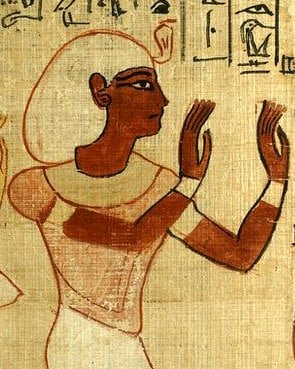
In Egyptian art, this protective eye is a crucial element. Pharaohs and warriors wore the Eye of Horus as an amulet, symbolizing health, protection, and divine insight.
3. Scarab Beetle – Rebirth and the Sun
At the chest area, the scarab beetle represents rebirth, transformation, and the journey of the sun god Ra across the sky. A sacred insect in Egyptian mythology, it was a common funerary charm.
4. Feather of Ma’at – Truth and Justice
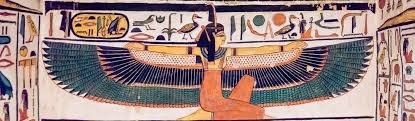
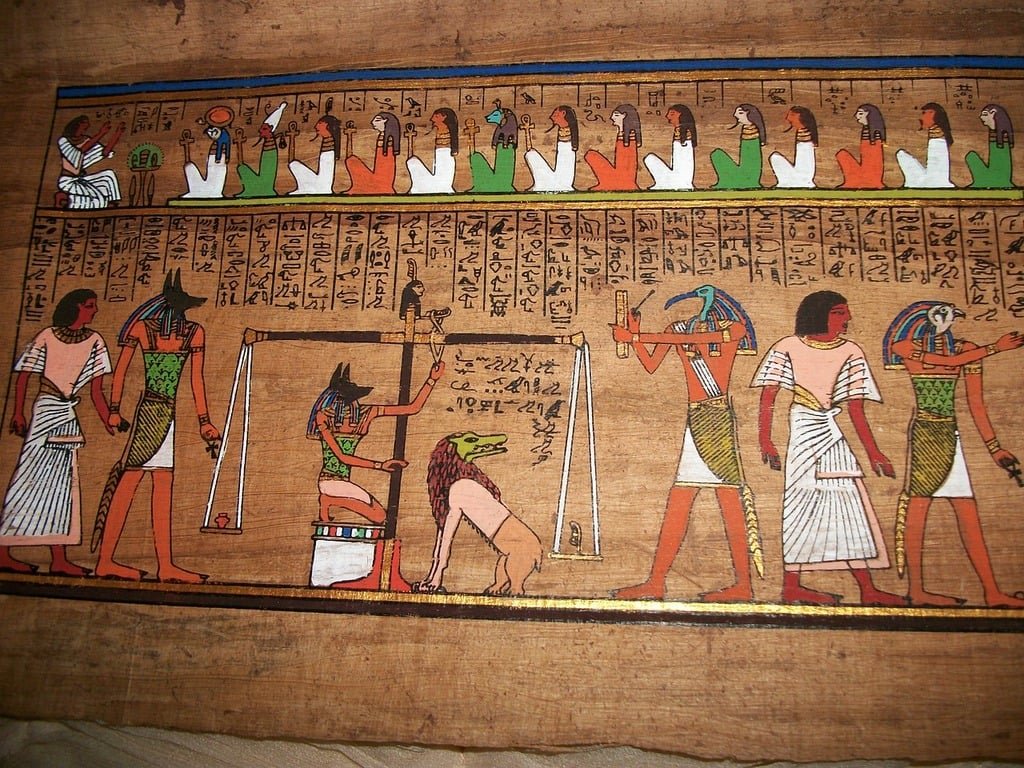
While stylized differently, a feathered pattern near the neck may allude to Ma’at, the goddess of truth and cosmic order. Ma’at placed her quill against the dead person’s heart on the weighing scales.
5. Was Scepter – Power and Authority
A staff-like icon seen in the design could reflect the Was scepter, a tool carried by gods and pharaohs, symbolizing dominion and control.
6. Horus Falcon or Ba Bird: The Freedom of the Soul
The bird close to the chest might be Horus, the falcon deity of kingship, or the Ba bird, which stood for the soul’s ability to travel between realms.
Read More: Egyptian Art: Discover the Magic of Egyptian God Art
The Artistic Style: A Modern Beat of the Old Drum
Although ancient artists established the Egyptian Deity Painting art form thousands of years ago, it still influences the world today. They originally created it to represent an idealized version of the world. However, in recent times, modern artists have reinvented this tradition by shifting toward bold aesthetics. As a result, people continue to embrace its mystic powers throughout the ages.
The artist blends tattoo-like detailing with geometric density, reminiscent of ancient hieroglyphs, yet undeniably contemporary. This aligns with a broader modern art trend where creators like Alaa Awad reinterpret ancient Egyptian Deity Painting motifs through street murals and abstract reinterpretations.
Why Raaigani Chose This Artwork?
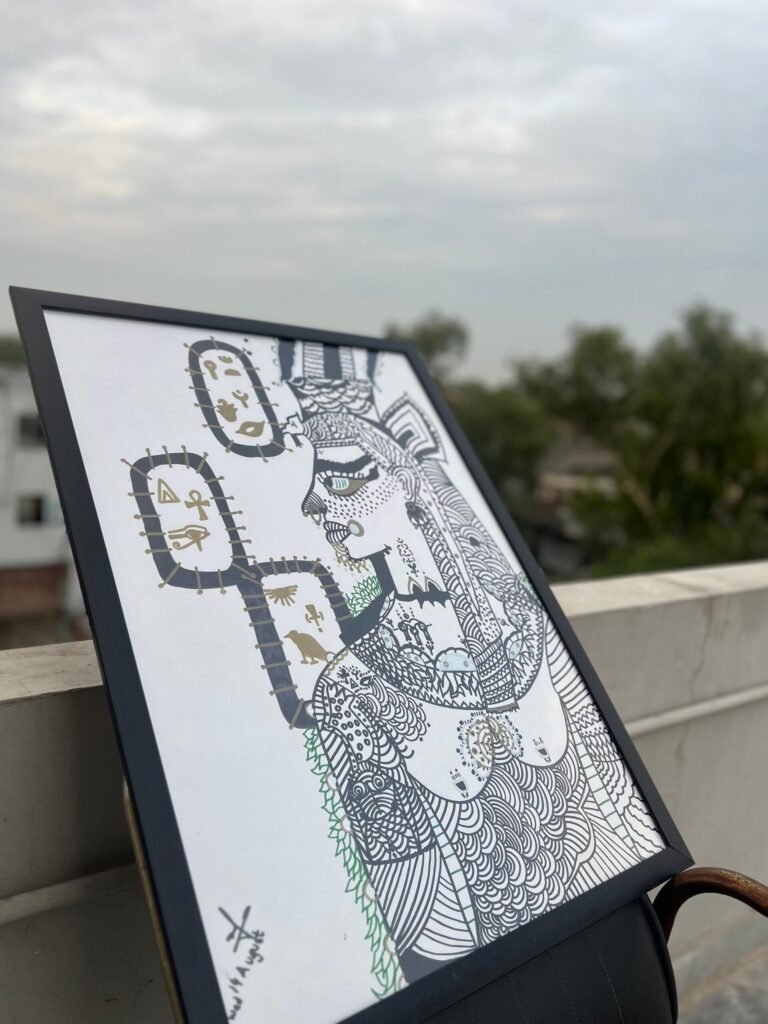
At Raaigani, each piece is selected for its cultural depth and creative uniqueness. This Egyptian deity painting captures the essence of what Raaigani stands for: Modern art rooted in sacred heritage, which the Artist Usman Faisal deeply understands. From its symbolic complexity to its clean, monochromatic palette, it reflects power, elegance, and purpose.
Modern Messengers, Ancient Message
Ancient Egypt’s influence on modern design isn’t fading; it’s rising like a phoenix. From runways to home interiors, Egyptian patterns and deities continue to inspire. This is because these deities represent more than just gods: they embody inner strength, transformation, clarity, and timeless beauty.
Final Thoughts
This Egyptian deity painting is not just a framed print; it’s like a portal to the mythological world. A blend of sacred iconography and modern design, it serves as both décor and dialogue. With this piece, Raaigani offers a chance to own something eternal, symbolic, and stunning.
About the Author
Zain Ul Abidin Yousuf Malik is a creative writer at Raaigani, passionate about storytelling through culture and tradition. His work blends simplicity, emotion, and clarity to connect with readers across generations.